
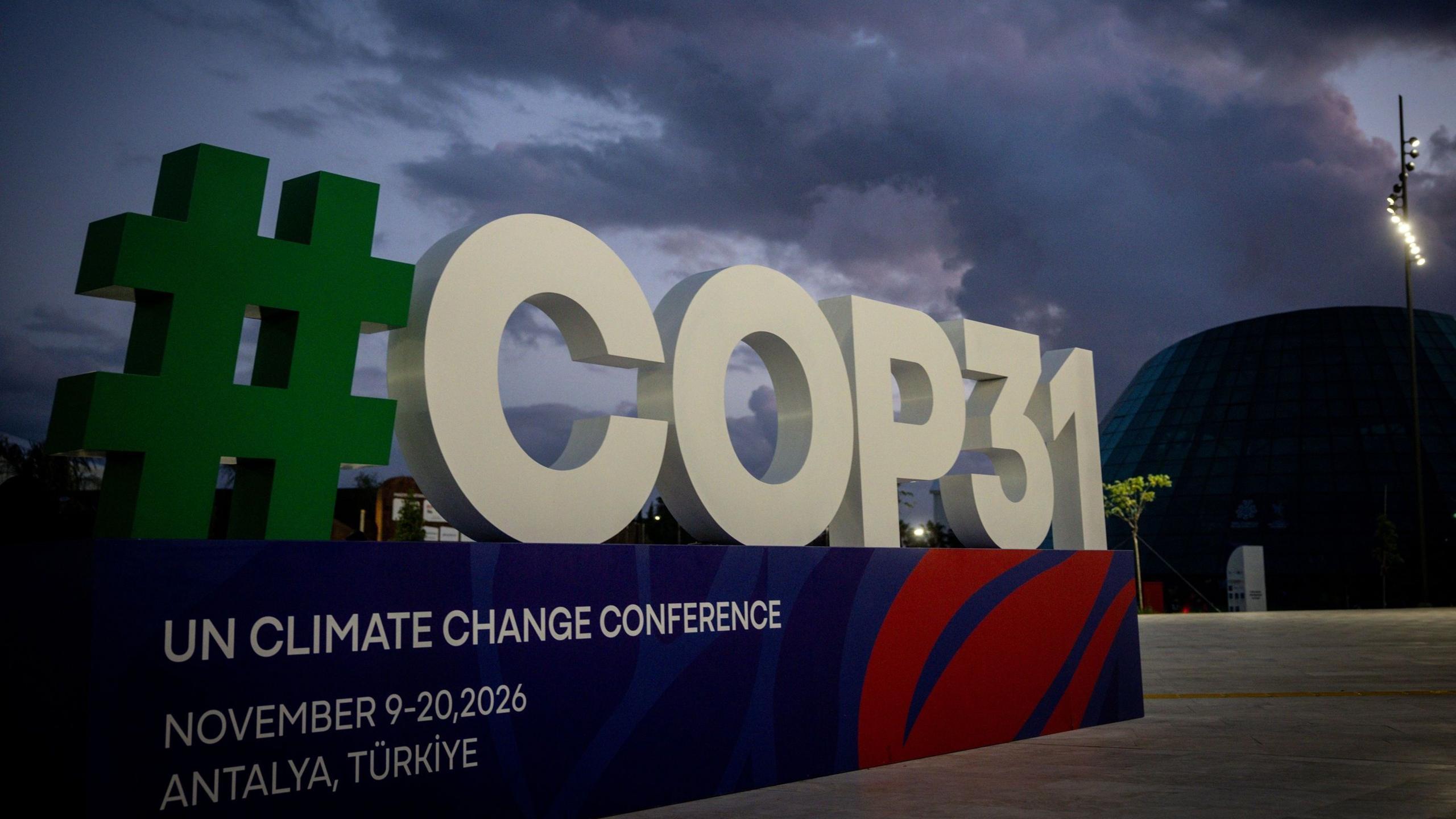
COP31 ended without a deal. That doesn’t mean it ended without progress.
Back in 2021, we looked at COP26 in Glasgow and asked a simple question. Good COP or bad COP? Five years on, Antalya has handed us an unexpected sequel.
The headlines have been brutal. COP31 ended without a final agreement, the first summit to collapse like this since Copenhagen in 2009, and some commentators are already calling it the worst COP ever.
But headlines only tell part of the story.
Bad COP: A deal that wouldn’t name the problem
Nearly 200 countries spent the longest COP on record trying to agree a final text. The last draft, the so-called Antalya Pact, didn’t mention oil, gas or coal once. Dubai’s promise to “transition away from fossil fuels” was swapped for vaguer wording, carbon capture was elevated from supporting act to centre stage, and a $120bn target to help poorer countries adapt simply vanished.
This was a deliberate effort by Saudi Arabia, Russia and other oil producers to keep fossil fuels out of the text altogether. Panama’s environment minister, Juan Carlos Navarro, put it bluntly: “We are being held hostage by the petroleum mafia.”
The US skipped the talks for the second year running, and whatever you think of American climate policy, it has historically been the one country with the clout to lean on Riyadh and get a deal over the line. This time, nobody had that leverage, and that’s because underneath it all is a bigger design flaw. COP works by consensus, so a handful of countries can block what everyone else wants. Navarro, the Panamanian minister, says “COPs are designed to fail”, and Panama now wants to take reform to the UN General Assembly.
So, on the headline political deal, the critics are right. Bad COP.
The walkout: A bit of backbone
This is where I disagree with a lot of the coverage. COP31 didn’t fail because countries walked away, it failed because a small group wanted a deal that said nothing. Around 130 countries signed a letter saying any agreement had to set out a path away from fossil fuels. The EU, the UK, Norway, Panama, Vanuatu, the Marshall Islands and the world’s least developed countries all refused the final draft. Many of them are the nations with the most to lose. The Marshall Islands said it would not “compromise our future to benefit fossil fuel interests”. For these countries, signing would have been the politically convenient option.
Everyone gets a handshake photo and flies home with a “deal”. But as climate scientist Katharine Hayhoe put it, a climate deal that leaves out fossil fuels is like a plan to quit smoking that never mentions cigarettes.
It would also have set a worrying precedent. Three years ago in Dubai, the world agreed for the first time to move away from fossil fuels. Signing a text that ignored them would have told every future summit that the commitment could simply be dropped.
The same goes for 1.5C. Under the 2015 Paris Agreement, almost every country agreed to keep warming well below 2C and aim for 1.5C above pre-industrial levels. This was the first COP since the UN warned we’re on course to overshoot 1.5C, and the draft would have formally admitted it. But with no mention of fossil fuels and a big bet on carbon capture, it looked less like a plan to get back under 1.5C and more like a plan to get used to living above it. By walking away, countries refused to accept overshoot as the new normal.
So why did the oil producers fight so hard? Because they know where things are heading. Renewables get cheaper every year and long-term demand for oil and gas is set to fall. Every year without a firm commitment is another year of selling their product. They aren’t winning the argument, they’re buying time.
Good COP: The progress behind the headlines
One of the most useful points I heard this week came from Christiana Figueres, who led the UN’s climate body when the Paris Agreement was signed, and Tom Rivett-Carnac on the Outrage + Optimism podcast. We’ve got used to judging a COP on the final political deal, but lots of negotiations happen side by side, and plenty of them moved forward.
- The summit backed a goal of getting 35% of the world’s energy from electricity by 2035, known as “35×35”. Countries representing around half the global economy signed up. The plan to deliver it brings together 150 countries, 37 cities and more than 260 businesses with over $4 trillion in combined annual revenue, across power, grids, transport, buildings and industry.
- Just transition. Countries agreed to set up a mechanism, in phases, to support workers and communities as economies move away from fossil fuels, with final sign-off expected at COP32. The work programme behind it was also extended for three more years.
- Adaptation and finance. Money raised through carbon credits will go towards helping developing countries adapt to climate impacts, and countries agreed next steps on tracking adaptation and on loss and damage funding.
None of that needed Saudi Arabia’s signature, and none of it would have happened if countries hadn’t turned up and sat in the same room.
Follow the money, not the minutes
The biggest reason for optimism has nothing to do with Antalya. The International Energy Agency says disruption to oil and gas through the Strait of Hormuz has been the biggest energy supply shock in history, making homegrown electricity more attractive by the month. As its head, Fatih Birol, put it: “we have arrived at the age of electricity”.
Take Pakistan. It didn’t wait for an international agreement. Fed up with an unreliable grid and expensive imported fuel, its households and businesses took matters into their own hands. Around 51GW of solar had been installed by March 2026, most of it on rooftops and farms rather than in government plans. According to the think tank Ember, it has all but ended daytime power cuts and saved the country more than $12bn in oil and gas imports. They didn’t need a COP text to tell them to do it.
This is why the co-benefits matter so much. Renewables and electrification cut carbon, but they also cut bills, keep the lights on, clean up the air and protect countries from fossil fuel price shocks. The same applies to every heat pump, electric car and solar panel here in Britain. Electricity generated at home is energy security. That’s becoming increasingly relevant for households too, as rooftop solar shifts from a climate choice to a cost-of-living and energy security choice.
The verdict
So, good COP or bad COP? Unfortunately, like everything in sustainability, it’s not that clear cut.
The political process failed, and the consensus rule that let it fail needs fixing. But around 130 countries refused to put their name to something weaker than what they’d already agreed, and away from the main negotiating hall, real progress was still made.
COP31 exposed a contradiction at the heart of climate diplomacy. Governments still struggle to agree on the future of energy, while households, businesses and investors are already building it.
So, the next stop is Addis Ababa, Ethiopia, for COP32. In the year until then, the future won’t be decided by a final text. It’ll be decided on rooftops, from Lahore to Leeds. Solar is cheap, quick to install and keeps bills down whatever happens to the price of oil. That’s just common sense, and it doesn’t need everyone to agree. It’s why, through Utilita, we’re helping more UK households put solar on their roofs.
Fossil fuel interests may have delayed progress in Antalya and bought themselves another year, but on the rooftops, they’re already losing.