
When you’re managing a busy household and juggling bills, keeping your energy costs under control is a top priority. With the cost of living putting extra pressure on budgets, understanding exactly where your money is going has never been more important.
For years, people have debated whether Pay As You Go energy is more expensive than paying by Direct Debit. The short answer is no – this isn’t necessarily the case. Today, PAYG tariffs can be just as competitive, and the features available to PAYG customers offer even more control over energy costs.
We’re here to clear up the common myths around pricing, explore how smart technology has improved the way you top-up, and explain why switching to a Smart Pay As You Go tariff could actually be one of the simplest ways to keep your monthly energy costs in check.
What is smart Pay As You Go energy?
If you’ve ever owned a Pay As You Go mobile phone, you already understand the concept of Pay As You Go (PAYG) energy. Instead of using gas and electricity throughout the month and getting a bill for it later (or paying a flat monthly estimate), you pay for your energy in advance.
You buy energy credit, load it onto your meter, and as you turn on your lights, boil the kettle, or run the heating, that credit slowly ticks down. When your balance runs low, you simply top it up again. This means you’re only paying for the energy you use and suppliers aren’t holding onto your money ready for what energy you might use.
To use a Smart Pay As You Go tariff, you need a specific type of setup in your home, usually referred to as a prepayment meter. In the past, these were traditionally meters that required physical keys or cards that you would take to a local PayPoint. Today, most prepayment customers use a modern smart meter. These upgraded energy meters communicate directly with your energy supplier, removing the guesswork from your energy usage and making the whole process much simpler.
How does modern, Smart Pay As You Go energy work today?
Topping-up your energy isn’t what it used to be. The days of having to get dressed, walk to the shop and top-up a key or a card are gone. With Smart PAYG, the entire process lives at your fingertips.
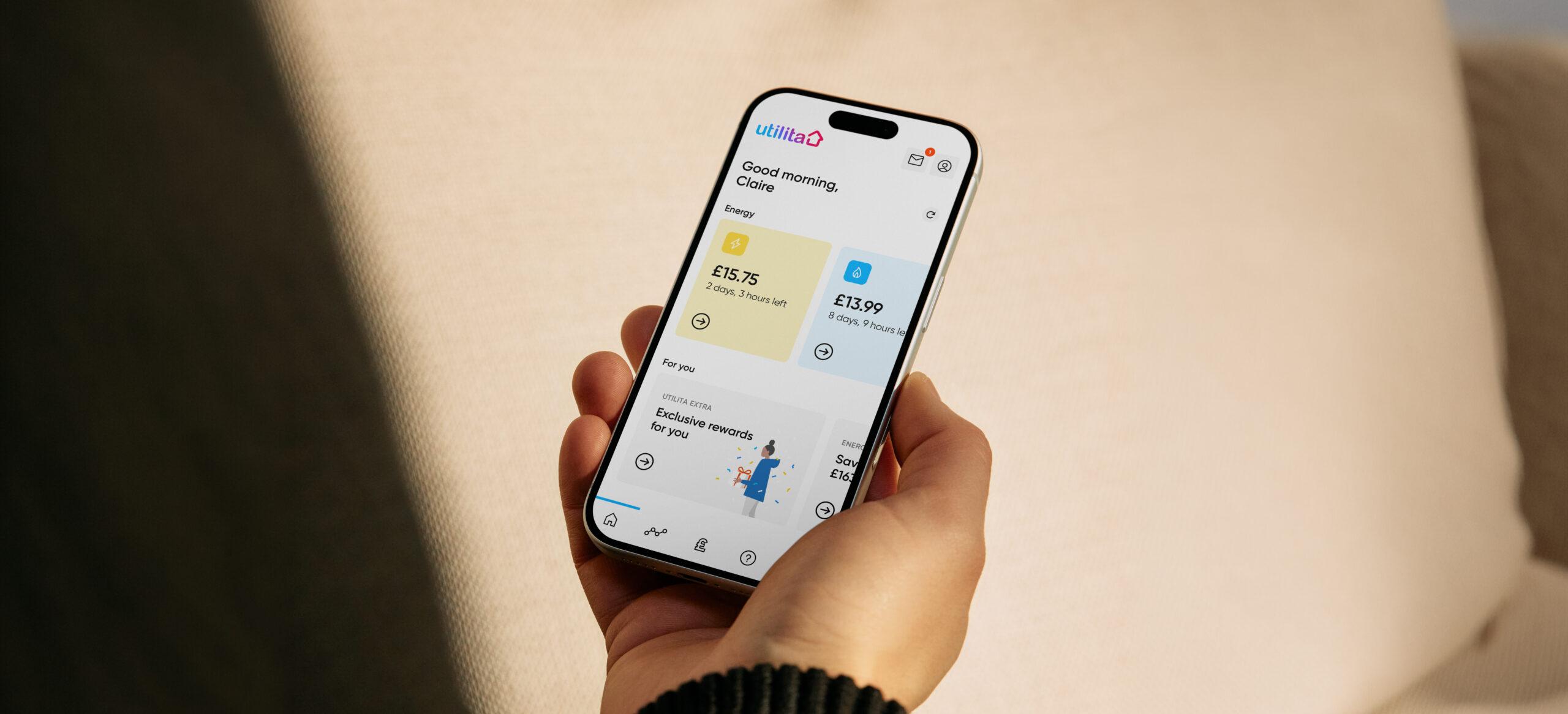
Of course, that option is still there for those who need it, but smart meters have made PAYG effortless. You can now top-up your energy at the touch of a button, wherever and whenever you like, all from the My Utilita app.
You can also monitor your balance in real-time on your smart display, so you always know exactly how much energy you have left.
Is Pay As You Go energy actually more expensive?
Is Pay As You Go energy more expensive than paying by Direct Debit? This is the most common question families have when exploring their energy options.
The short answer is no. It’s a very common myth that Pay As You Go means paying more.
Previously, PAYG tariffs did carry slightly higher rates. Although in 2023, the Government lowered Pay As You Go prices to fall in line with Direct Debit prices – which made it much fairer for people who use PAYG.
As a result, PAYG customers now actually have the lowest standard variable Ofgem Energy Price Cap level. This does vary by region, but topping-up your energy is no longer automatically the most expensive way to pay.
Although it’s worth noting that it isn’t payment method alone that determines whether you’re getting a good deal. The actual cost of your energy comes down to two things: your Unit Rate (how much you pay for the actual energy you use) and your Standing Charge (a fixed daily fee most suppliers charge even when energy isn’t used).
Not needing to pay a Standing Charge
When you pay by Direct Debit, almost every supplier will charge you a daily Standing Charge. This is a fixed amount you pay every single day just to have your home connected to the energy grid, regardless of whether you actually use any gas or electricity. These charges can add up to hundreds of pounds over the course of a year.
Depending on your supplier, this is where PAYG can offer a financial advantage. For example, Utilita don’t have a Standing Charge for any of our PAYG tariffs1. If you don’t use any energy, you won’t be charged a penny.
So, if you’re out of the house at work all day, or if you take the family away for a weekend, you aren’t paying a daily fee just for your meter sitting there doing nothing. As long as all your appliances are switched off and no energy is used, you won’t be charged. When household budgets are stretched, not paying a fixed daily fee gives you extra breathing room.
Why more households actively choose Pay As You Go for their energy
Now that we’ve covered that PAYG isn’t automatically more expensive, it’s time to consider the other reasons customers are making the switch to topping-up their energy in advance.
Many customers are now actively choosing Smart PAYG, not just because of the convenience, but because of the control it gives them over their spending and weekly budgets. Here are just a few examples:
1. No more predicted costs or shock bills
When you pay by fixed Direct Debit, your energy supplier estimates how much energy they think you’ll use over the year and divides it into 12 equal payments. If the estimate is too high, you build up credit that your supplier holds onto until you ask for it back, and if it’s too low, you end up owing money and facing a higher payment while you catch up.
With Smart Pay As You Go, there aren’t any surprises. You top-up what you need, when you need it. You’re never charged “predicted” costs, and you’ll never have to worry about a sudden bill dropping through the letterbox at the end of winter.
2. Understand exactly where your money goes
When you get a standard energy bill once a month, it can be hard to know exactly which habits or appliances are driving your costs up. A Smart Pay As You Go meter paired with a Smart Display or a mobile app like My Utilita gives you near real-time visibility.
This instant feedback helps you easily identify what is draining the most energy in your home, allowing you to make small tweaks to your daily routine. You’ll quickly see that turning the heating down by one degree or swapping to an air fryer when cooking, can combine to save you £££s. You can check out how to be more energy efficient at home with our seasonal Utilita High 5 tips.
3. Make weekly budgeting much easier
When budgets are under pressure, having total control over what you spend can be just as valuable as a slightly lower headline figure. With Pay As You Go, you decide how much you want to spend on energy each week based on what you actually have in your bank account. You can buy smaller amounts of energy more frequently, lining up your top-ups perfectly with your payday or weekly food shop.
What happens if you run out of credit?
The biggest difference between Direct Debit and Pay As You Go is that with prepay, you must keep an eye on your credit balance to maintain a constant energy supply. If your meter balance hits zero, your supply will switch off and will need to be restored.
Although, if you utilise our Auto Pay feature – your meters will automatically be topped-up an amount of your choice when your credit runs low, so you don’t have to remember to do it manually. To find out more, check out our handy help article.
If you’d rather not use Auto Pay, modern smart meters also have built-in safety nets to try and protect you from suddenly sitting in the dark. This is how we do things at Utilita:
- Emergency Credit: If you’re a smart Pay As You Go customer, you can access up to £15 of Emergency Credit per fuel when your balance falls below £1, meaning you can stay on supply long enough for you to top-up again.
- Friendly Credit Hours: If you run out of credit on weekdays after 2pm, our Friendly Credit Hours keep you on supply until 10am the next day. Plus, we’ll keep you on supply during weekends and bank holidays too, even if you run out of Emergency Credit.
- POWER UP: At Utilita, we want to do right by our customers. That’s why, with POWER UP, eligible customers can access up to £25 credit per fuel directly from the My Utilita app, when you’re low and can’t top-up straight away. All you’ll need is a smart meter we can communicate with, and no more than £50 of debt on that meter.
These are just three of the ways we can help when you’re struggling. Emergency Credit needs to be repaid from your next top-up, while Friendly Credit Hours and POWER UPs must be paid back through Recovery Rate. You’ll set your Recovery Rate between 20% and 100%, meaning a percentage of your future top-ups will go towards paying back your outstanding debt.
For example, if you have a Recovery Rate of 20% and you top-up £10, the first £2 will go towards paying off your outstanding debt, with the remaining £8 going towards your ongoing energy usage. Don’t worry, your Recovery Rate can be amended at any point in the My Utilita app, as long as it’s 20% or above.
How to change energy supplier if you’re on Pay As You Go already
If you’re already on a Pay As You Go tariff with one supplier, and you’re considering making a switch, it’s easy – just follow these simple steps.
Step 1: Compare your options
Don’t just look at the Unit Rates. Check the Standing Charge (remember, zero Standing Charge tariffs mean you only pay for what you use). It’s also handy to check out features on offer in apps like My Utilita, and each supplier’s customer service ratings. For a full breakdown of how to properly compare energy tariffs, check out our dedicated blog.
Step 2: Start the switch
Once you’ve chosen a new supplier, simply sign up through their website or app. You’ll need to provide your address and a few basic details. You can join Utilita in no time at all by visiting our website.
Step 3: Let the suppliers handle the rest
Your new supplier will contact your old supplier to arrange the switch. This usually happens very quickly. There will be no interruption to your gas or electricity supply during the transfer. For more information on what to expect when switching to Utilita, check out our help article.
What if you have a traditional Pay As You Go meter?
If you have an old-fashioned key or card meter, your new supplier usually arranges to upgrade you to a smart meter for free as part of the switch. This unlocks all the app-based top-up features and real-time tracking that makes managing your energy so much easier.
Is Pay As You Go right for you?
Much like choosing between different tariff types, there isn’t a single “correct” payment method for everyone – there is just what is correct for your household circumstances.
If you like the idea of paying a flat, automated bill every month and don’t mind not seeing the daily breakdown of your costs, standard Direct Debit might suit you just fine.
But if you’re focused on keeping your costs as low as possible, stopping unexpected bills in their tracks, and having absolute visibility over your household spending, then a Smart Pay As You Go tariff may be right for you.
If you want to know more about how our Smart Pay As You Go tariffs work, or if you want to explore the features available on the My Utilita app, read on here.
1 Most of our Pay As You Go tariffs have no Standing Charge, so on any day you don’t use energy, you pay nothing. Instead, the first 2kWh of electricity and the first 2kWh of gas you use each day are charged at a higher rate, and anything after that at a lower rate. When comparing tariffs, compare both of our rates with the Unit Rate and Standing Charge of any other tariff.