
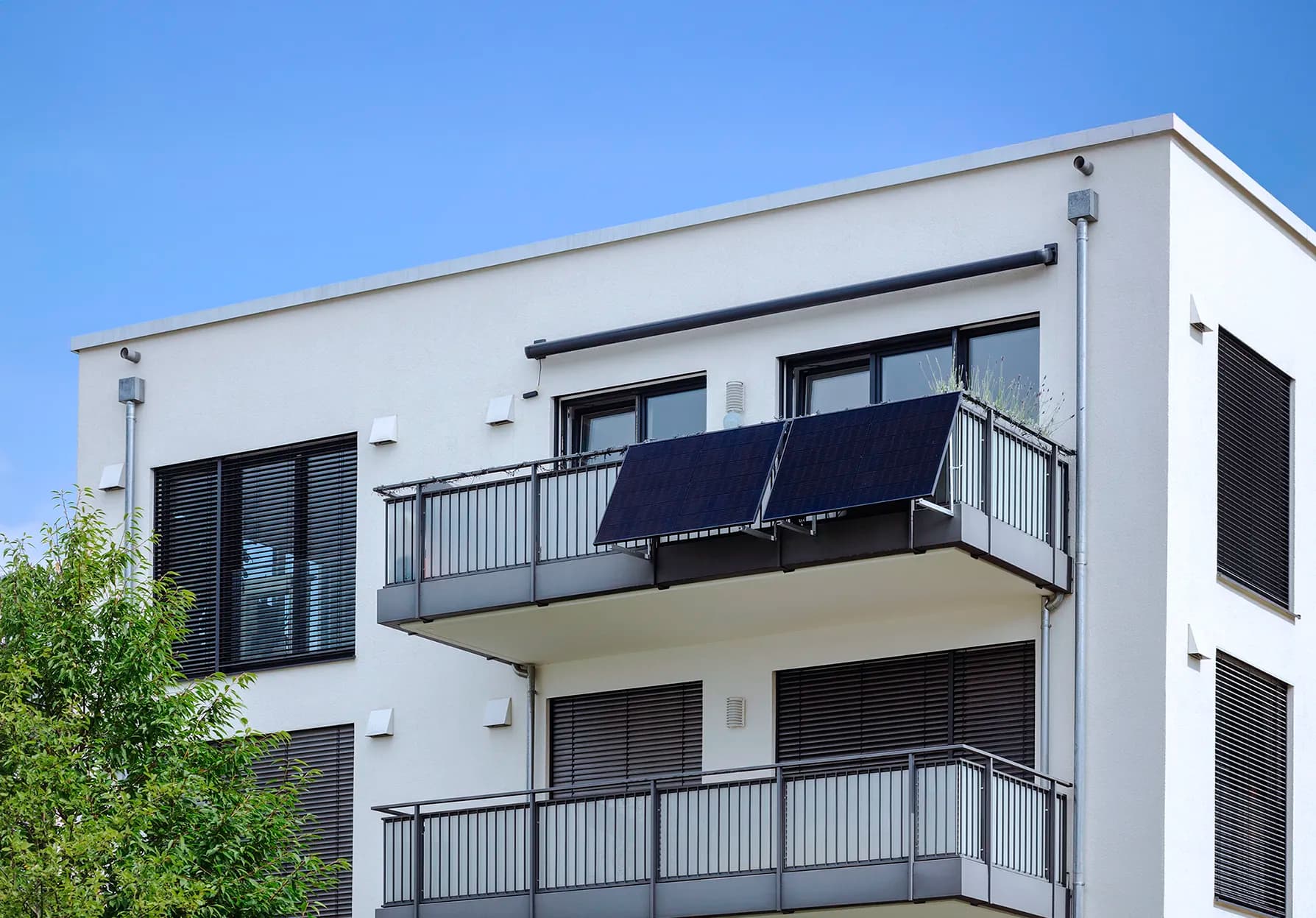
Plug-in solar panels are being talked about everywhere and may become one of the simplest ways for more UK households to reduce their energy bills.
If you’ve ever looked into installing solar panels for your home, you’ll know it’s not always straightforward. You need the right roof, and you usually need to own your home. That’s meant a lot of households, especially renters and people in flats, have been left out. Plug-in solar panels are starting to change that, with the government preparing to make them available within months.
What are plug-in solar panels?
Plug-in solar panels are a smaller, simpler alternative to a traditional rooftop solar system.
Instead of being permanently installed on your roof and connected into your home’s wiring, plug-in solar systems are designed to be easy to set up and use. They typically consist of one to four panels that can be installed on a balcony, wall, or in a garden, and connected directly into your home.
How do plug-in solar panels work?
In a nutshell, plug-in solar panels work by:
- Capturing sunlight throughout the day.
- Converting sunlight into renewable electricity.
- Feeding that electricity directly into your home (via a standard wall socket).
- Reducing how much energy you need from the grid.
Plug-in systems are much lower in capacity than rooftop systems, usually up to around 800 watts, which is the level currently being considered for plug-and-play use in the UK. That means they won’t power your whole home, but they can help cover everyday electricity to help reduce the amount you draw from the grid.
Some systems can also include a small battery – allowing you to store electricity generated during the day to be used later in the day when demand is higher. This added flexibility can help you get more value from the energy you generate, and over time opens the door to smarter energy use, where you can shift when you use or store electricity depending on price and demand.
Why are plug-in solar panels gaining momentum in the UK?
Energy price volatility over the last few years has made people much more aware of how they use electricity, and more interested in ways to take control of their bills. Recent conflicts in the Middle East are a prime example of how the UK is easily exposed to fluctuating energy prices, so finding alternative ways to reduce reliance on grid electricity is becoming more and more popular.
At the same time, technology has become more affordable, and there’s growing interest in practical ways to reduce both costs and emissions at home.
In countries like Germany, plug-in solar panels have already become a mainstream renewable energy option, particularly for flats and apartments. In the UK, the government is currently reviewing how these systems can be safely rolled out more widely, which could open the door to broader adoption.
How do plug-in solar panels compare to traditional rooftop solar?
Plug-in solar and rooftop panels aren’t in competition as they serve different needs for households.
Rooftop solar panel systems remain the most effective way to generate significant amounts of renewable electricity at home. They can power a much larger share of your usage and, over time, deliver greater savings.
Plug-in solar panels are much smaller in scale. It definitely won’t replace a full rooftop system, but it can still make a noticeable difference to everyday electricity use. It also offers a simpler, lower-commitment way to get started with solar at home, with the option to build up over time.
For households that can install rooftop solar, that’s likely to remain the best long-term option. For those who can’t, plug-in solar offers a practical alternative.
Who is plug-in solar designed for?
Adopting plug-in solar panels in the UK opens access to clean, renewable energy for many more households across the country, including:
- People who rent.
- People living in flats.
- Homes without suitable roofs or roof space.
- Households looking for a lower-cost, lower-commitment starting point.
It’s one of the first solar options that is genuinely accessible to a much wider group of households, including those who have traditionally been excluded. For some, it may be a first step into generating their own energy. For others, it may simply be the most practical option available.
Are plug-in solar panels worth it, and will they impact on your energy use at home?
A typical plug-in solar panel system won’t run your entire home. But it can help power the things that are always on in the background, like your fridge, router or appliances during the day. That means:
- Less electricity drawn from the grid.
- Lower energy costs over time.
- More visibility and control over how energy is used.
- Long-term protection from volatile energy prices.
It also reflects a simple principle that the cheapest and cleanest energy is the energy you generate yourself, or don’t need to use in the first place.
At a system level, more small-scale generation across lots of homes can help support a more flexible, resilient energy network – which is needed to build a sustainable future.
Can you export electricity back to the grid with plug-in solar?
At times, your solar panels system may generate more electricity than you’re using. With traditional rooftop solar, this excess can often be exported back to the grid under formal export schemes.
Plug-in solar panels work slightly differently, primarily because the systems are smaller – therefore most of the value comes from using the energy in your home rather than exporting it. There may be a little bit of excess energy to export when your household demand is very low, but this will only be occasionally.
Where batteries are included, this becomes more flexible. Instead of exporting surplus energy straight away, it can be stored and used later when electricity is more valuable, for example in the evening.
Over time, there is also potential for smarter optimisation. By combining solar generation, battery storage and time-based pricing, households could make more informed decisions about when to use, store or export energy, creating additional value beyond simple bill savings.
How we’re thinking about plug-in solar panels at Utilita
At Utilita, we see plug-in solar panels as a way to make solar and renewable energy generation more accessible, particularly for customers who haven’t previously had the option.
We’re currently exploring how we can support customers who choose to install plug-in solar, focusing on making the experience simple, clear and easy to manage, especially for those who are new to it.
This includes looking at:
- Straightforward onboarding and guidance.
- Helping customers understand how much energy they’re generating, using and potentially exporting.
- Providing simple tools or dashboards to make this visible and easy to track.
- Ensuring customers can get value from their system without unnecessary complexity.
With the UK energy transition underway and households being at the centre of that shift, we aim to take some of the friction out of getting started with solar at home, so customers can feel confident they’re using their system safely and effectively – all while supporting a cleaner future.
What happens next?
Plug-and-play solar panel systems are still emerging in the UK, and the government is currently reviewing their safety and regulatory framework, which will shape how widely they can be adopted. You can find more detail on the current consultation here.
As these new systems develop, we’ll continue to share updates as soon as we hear them, including how you can get involved and what support may be available.
Thinking about installing rooftop solar instead, but not sure if it’s suitable for your home? Check your eligibility for free with Utilita Home.